

Integrating just transition outcomes into the European macroeconomic landscape
Written by Gemma John
The missing link: connecting central bank mandates to just transition
Central banks increasingly talk about the shift to a low-carbon economy, but rarely about who bears its cost - workers in declining industries, low-income households, regions left behind. There's no shared definition of what "just transition" means for a central bank, and no coordination body has yet put it on the agenda.
Alongside the Laudes Foundation, we convened a Community of Practice spanning research and academia, civil society and labour organisations, sustainable finance, and international development, to identify the instruments and tools where just transition can be integrated most easily, and to build the evidence and champions needed to move it from talk to action, with a view to bringing central banks and supervisors into the conversation directly. The recommendations will be delivered in November.
The barriers: two things missing
Currently, there's no shared definition of what "just transition" means for a central bank, and no coordination body has yet put it on the agenda. The ILO definition appears the most widely cited reference point, but it also raises practical questions. It is not specific enough to be operable, and practitioners are unclear on how it aligns with what central banks, supervisors, and regulators actually do.
What does this mean for central banks? It means that action is ad hoc and not coordinated, and without an empirical foundation and shared reference, every other problem remains structurally out of reach - including the question of mandate. A central bank cannot consider just transition in relation to its mandate without workable definitional work in place. This is Problem type 1 in Figure 1, drawn from our stakeholder interviews.
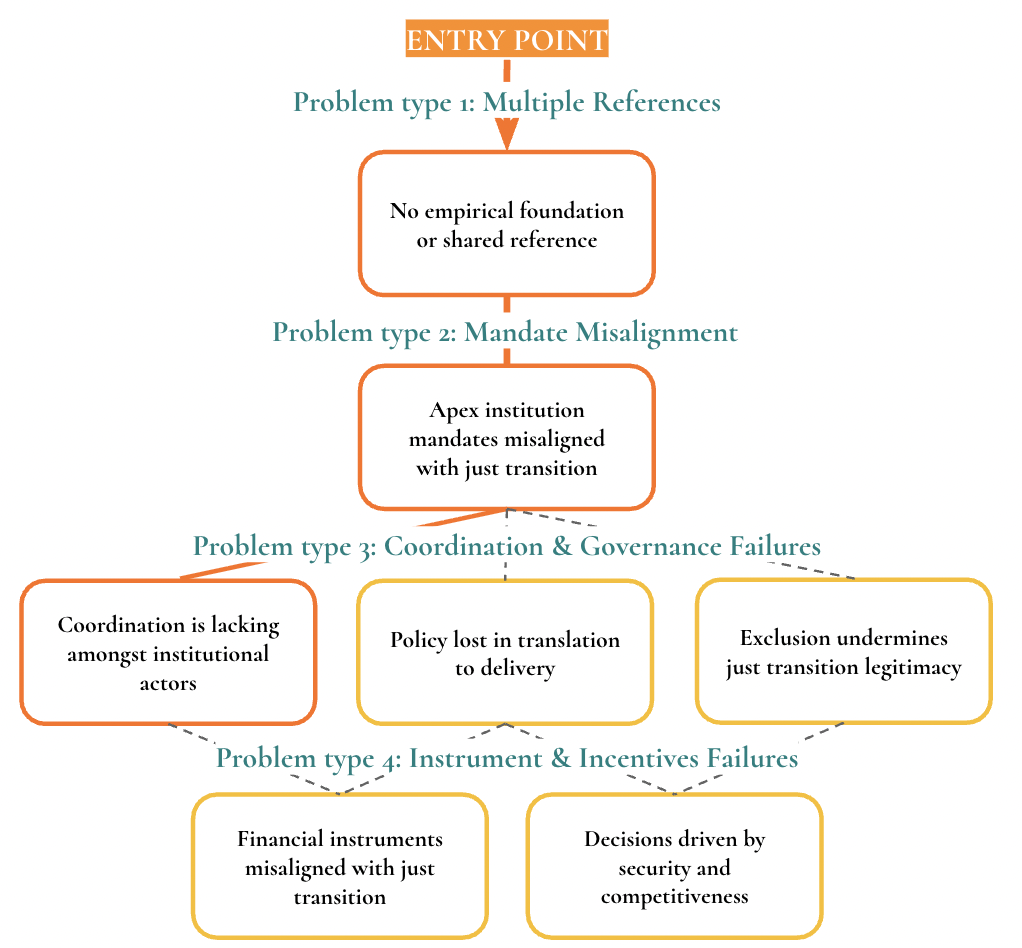
Figure 1What central banks need is a shared empirical framework that hones in on the central problem: just transition social risk constitutes financial stability risk. Once that definition is established and the evidence base is built, it is easier to make the case for mandate alignment. At that point, specific arguments become deployable to specific institutions, within specific windows. In Figure 1, that's Problem type 2 i.e. mandate misalignment.
Figure 1 shows the connection from the entry point (Problem type 1) through mandate misalignment (Problem type 2) to coordination and governance failures (Problem type 3). These are the connections our workshops are testing directly, based on what stakeholders told us in interviews.
But, what if it’s easier than it first appears?
On closer inspection, these barriers are a bit easier to tackle than they first appear. Having pre-empted the "central banks don't have a mandate for this" objection, our initial engagement with stakeholders as part of the Community of Practice surfaced a reframe: the structural problem is really one of entry point versus end point. Within the European Central Bank and Eurosystem national central banks specifically, resilience and financial stability are already an obligation. In other words, price stability and financial stability cover the social fallout of the transition, if the causal link can be shown. That makes “resilience” the pragmatic entry point. And the end point? Well, an ambition that is perhaps harder to measure albeit a very real and systemically important one: “distributional equity”. But it's precisely at that handoff that the problem shows up: where just transition language enters institutional frameworks, the distributional component is often what gets lost first.
So what are we doing about it, pragmatically? We're using "resilience" as the entry point to test what already exists, and have been looking across central bank instruments and tools to see whether any offer a viable starting point for integrating just transition via the mandate. We'll be writing a separate blog on exactly what we found searching for direct and indirect mentions of just transition in central bank speeches.
The pathway to impact: how climate risk was integrated
Luckily, we’re not working in a vacuum and we have precedents in climate and nature. Climate is particularly useful, as it provides us the path to take-off point: when a legitimising voice makes a case for climate risk on a platform that sends signals for change to supervisors. Indeed, for climate risk, this sequence looked like:
Global basis and legitimising voice — the Paris Agreement (2015) gave climate action a global basis, and Carney's "Tragedy of the Horizon" speech (2015) made the case on a platform that reached supervisors directly, tying climate to financial stability.
Coordination venue — the Network for Greening the Financial System (2017) turned isolated practice into shared, adopted practice.
This is why we're considering the following steps for just transition integration, identifying instruments and tools that already have evidence we can build on or expand in relation to resilience, that are within reach in our network, and championed by credible voices. This will be the focus of our Community of Practice for 2026, to establish what it takes to deliver a small number of instruments and tools, and who we need in the room to deliver them, and whether that's technical (finishing or deploying work that's already substantially built) or relational (finding or activating stakeholders).
Next up: finding a coordination venue, carried by a legitimising voice - until supervisory expectations move from draft/unbinding to mature/binding. Arguably, our global basis is already here. El Niño 2026–27, a forecastable global shock we need to get ahead of.
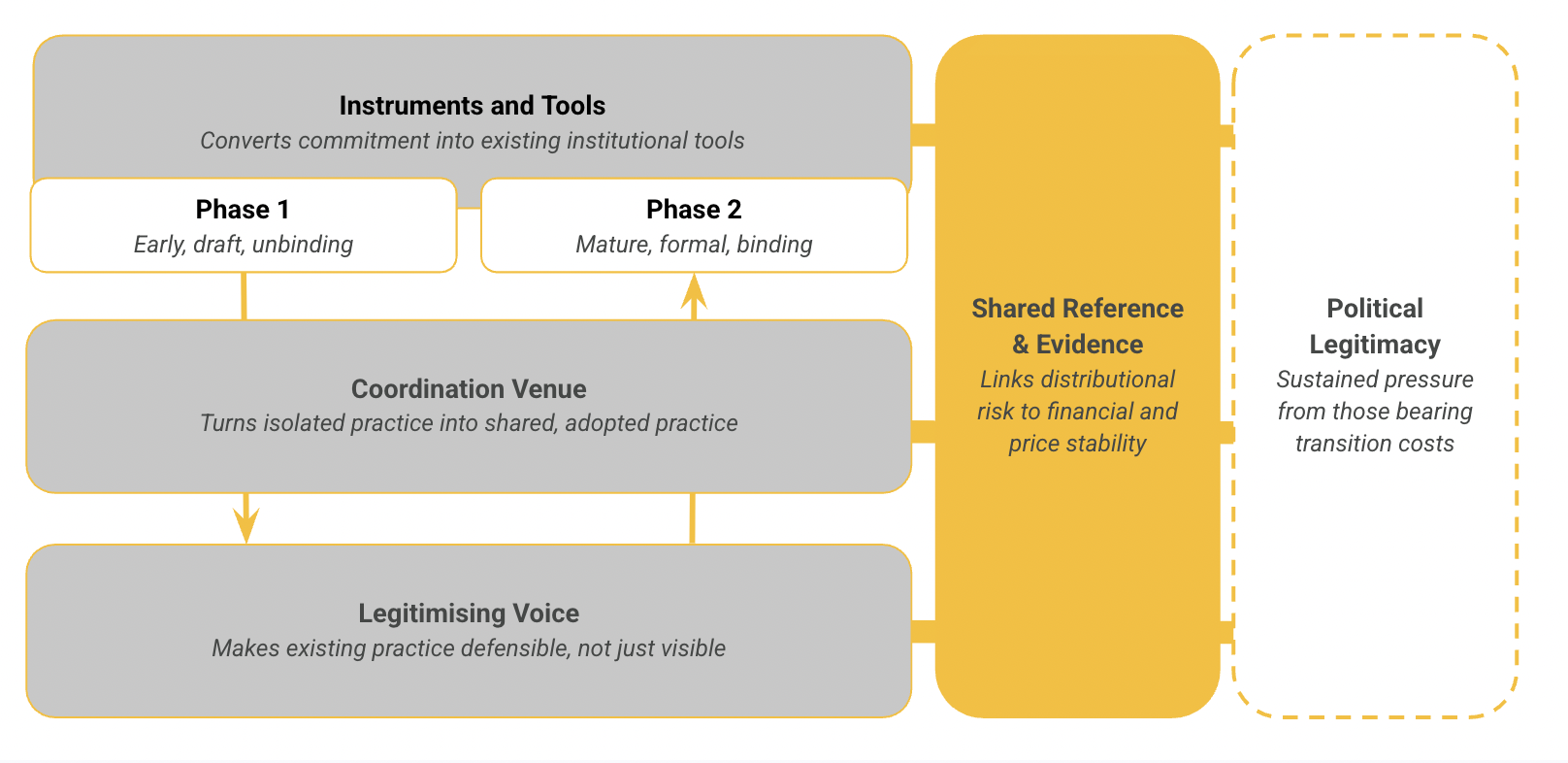
Figure 2Introducing the Community of Practice
The Community of Practice is designed for alignment on a common goal: the key barriers to progress, the current status of progress, and what it would take to move forward. We've done this over two workshops, bringing together research and academia, civil society and labour, sustainable finance, and international development - people who have either worked in central banks or adjacent to them, and who are already working on these problems or knocking on doors.
Figure 2, above, points to “political legitimacy”, and it comes from sustained pressure by those bearing transition costs. This is why we have the Trade Union Advisory Committee to the OECD in the room, representing the voice of organised labour directly, rather than leaving that pressure to be inferred or represented second-hand.
In Workshop 3, we'll bring in additional stakeholders to stress-test our theoretical basis, operationalise it, and agree on the biggest priority deliverable for the Community of Practice, and the institutional relationships needed to deliver it.
What's coming in November this year
First we’ll share more of what we found out by analysing central bank speeches, revealing which banks are already making the underlying argument, even without the label, and where the language is doing real work versus sitting as framing.
Second, we’ll be sharing the outcomes of Workshop 3, having identified which instruments and tools offer the most tractable entry point for just transition integration, tested against the institutional relationships we have identified that are needed to actually deliver. We'll also be sharing what it will take to move from here - and what we are taking forward in terms of technical (finishing or deploying work that's already substantially built) or relational (finding or activating the stakeholders who can carry it) work.
Piqued your interest? Look out for two more things: our blog on what central bank speeches reveal, and our recommendations report published later in the year.
Dr Gemma John | gemma@103.ventures
